Rider Adaptability
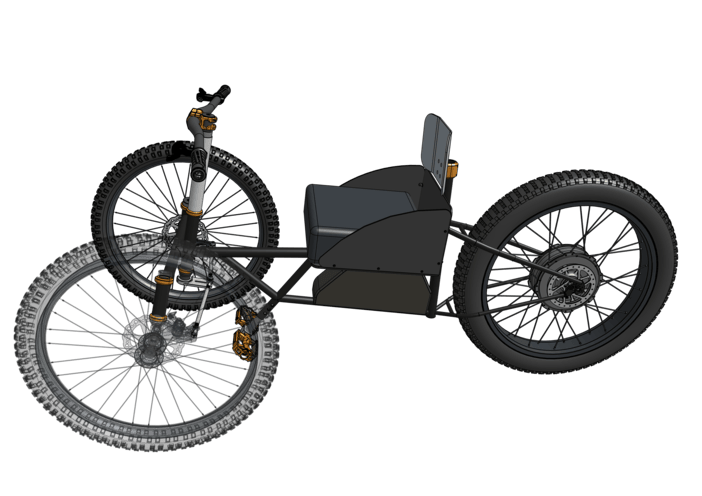
- Three rider positions from upright to long-sitting.
- Seat, support, and restraint points adjust for individual fit.
- Focus on inclusive rider onboarding.

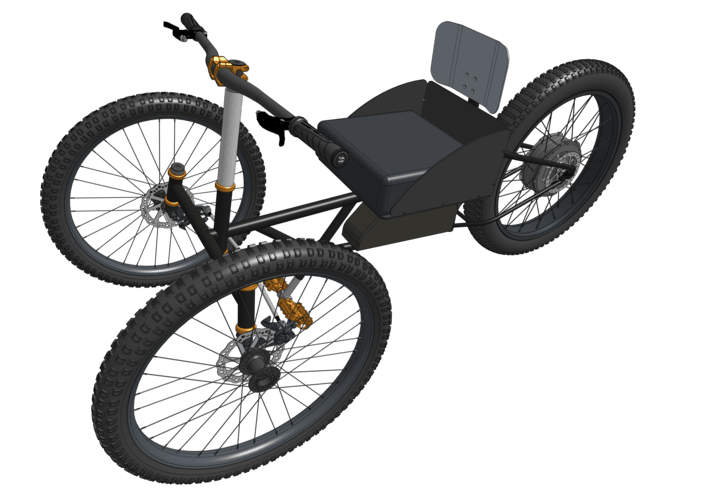
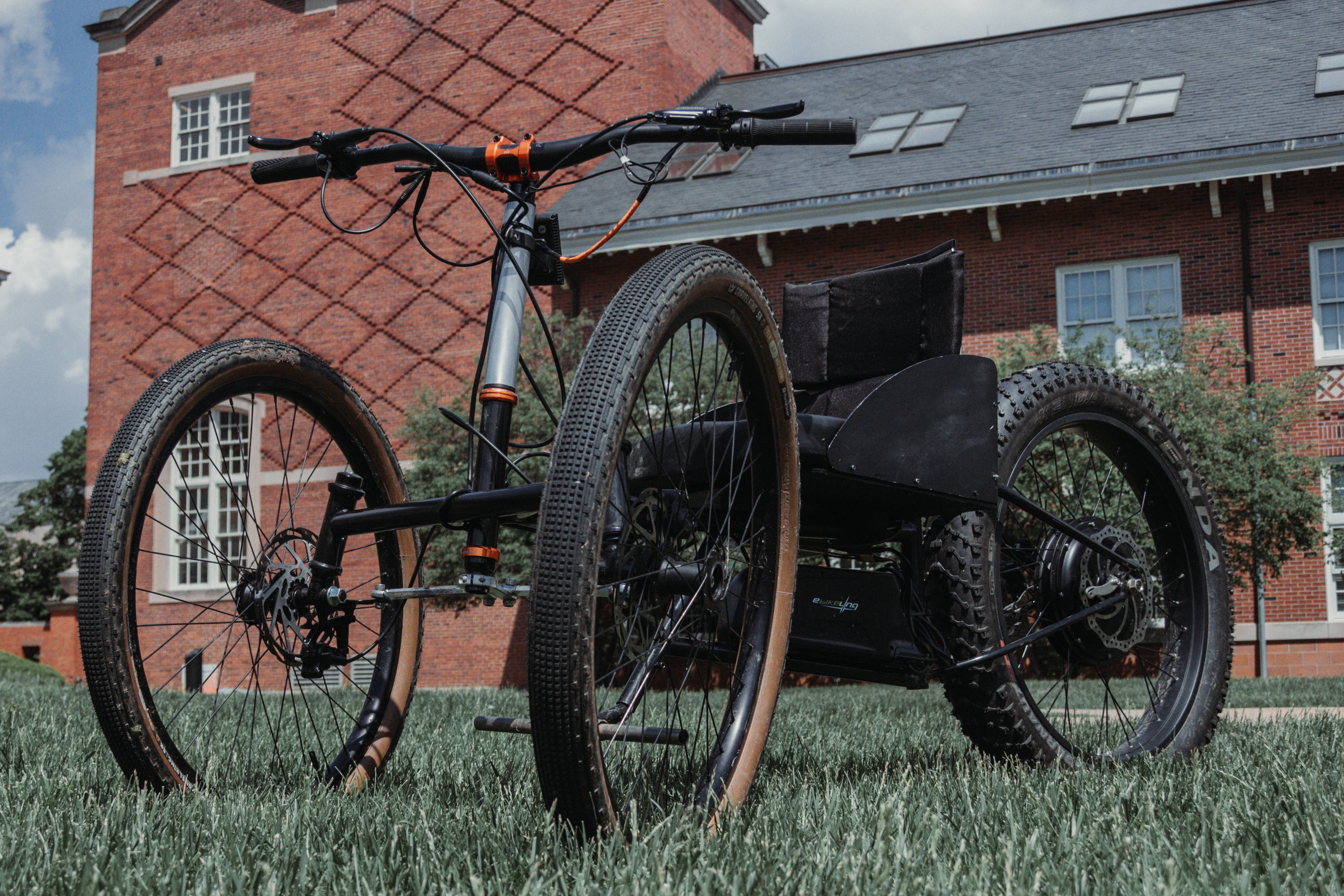
An adaptive all-electric trail trike. Designed for diversity, built for freedom.
.jpg)
.jpg)
.JPG)
.JPG)
Core product priorities and component intent. Click a card to expand, hover the diagram to inspect.
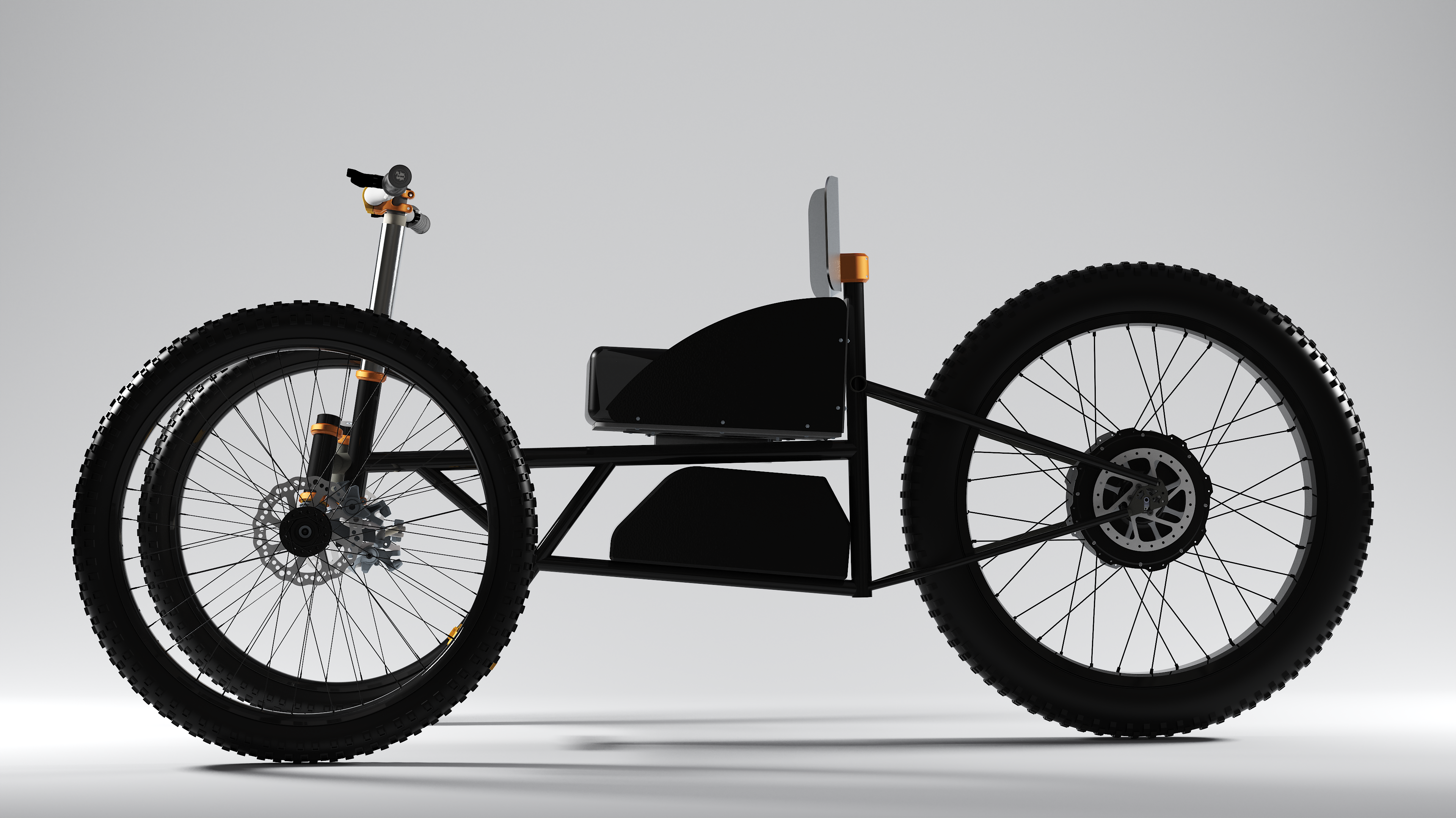
| Component | Function |
|---|---|
| Front Wheel Pair | Provides steering stability and a predictable front contact patch on varied trail surfaces. |
| Fat Rear Tire | Adds passive shock absorption and rear traction where the frame stays rigid for durability. |
| Rear Hub Motor | Delivers electric propulsion from the rear wheel to support climbing and longer assisted outings. |
| Rigid Frame | Keeps the architecture simpler to maintain, easier to service, and more durable for fleet use. |
Select a position to explore the configuration. All fit points adjust to support a wide range of riders and disabilities.
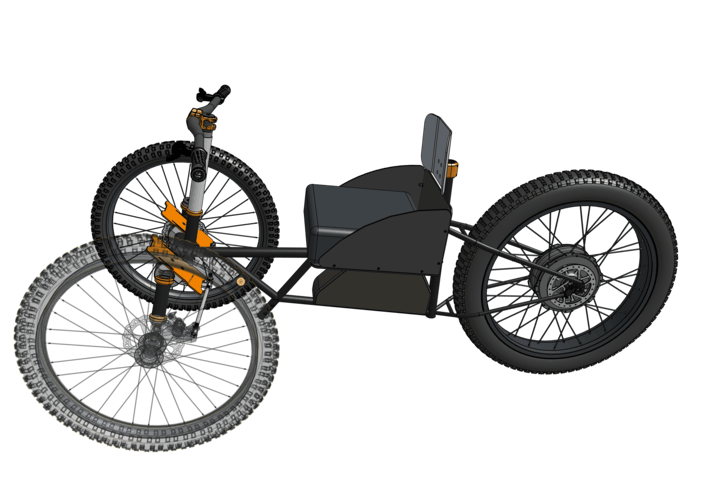
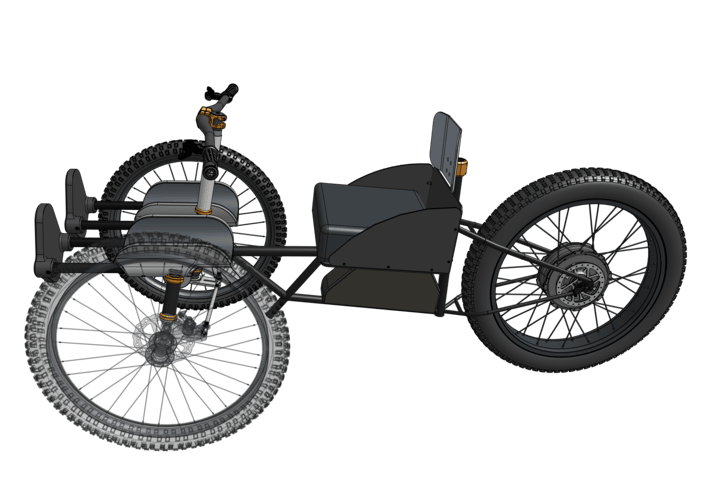
Operational targets are designed around real volunteer workflows. Click a stat for more detail.
Only two fastener sizes: M5 and M8. Shared lengths allow easy interchange.
| Configuration | Tadpole trike |
| Motor | Bafang geared motor or Grin MAX45 Fat Hub Motor |
| Battery | 52V 50-AMP 20 Ah battery |
| Brakes | Tektro Auriga Twin hydraulic disk brakes |
| Max torque | 95 Nm |
| Top speed | 20 mph |
| Range | 40–80 miles |
| Max grade | 20% |
| Types of trails | Fire roads, double track, some hiking trails, gravel trails, paved bike paths |
| Wheels | Front: 26 x 2.4; Rear: 26 x 4.5 fat tire |
| Tube configuration | Tubeless |
| Frame architecture | Rigid frame |
| Dimension | Koine RAINIER | Other AMTBs | Not A Wheelchair — The Rig 2.0 |
|---|---|---|---|
| Best Fit | Programs prioritizing accessible trail riding, easy transfers, simple setup, durability, and a realistic price point | Programs seeking premium off-road capability, higher-end components, and specialized performance features | Individual riders prioritizing raw off-road capability; falls into the mini-ATV category — heavy, bulky, and harder to transport and stage than a trail trike |
| Transfer Ease | Single rear wheel allows the rider to transfer closer to the seat, reducing reach and simplifying volunteer-assisted onboarding. | Often optimized more around performance or a specific rider profile than easy assisted transfer. | Transfer is accessible but the wide dual-rear wheelbase requires the rider to transfer from further away, increasing difficulty for some users and volunteers. |
| Adaptive Support | Built for higher-support use cases with fit-adjustable restraint and seating points. | Can be excellent for specific riders, but usually at higher complexity and cost. | 18" fixed seat width with 250 lb weight capacity; less focus on adjustable adaptive seating or restraint points. |
| Price Position | $8k initial retail; 3-year target $5k | Typically $13k+ and often higher with premium controls, suspension, and customization | $5,999 launch price (pre-order); Big Rig at $11,999 |
| Trail Positioning | Adaptive trail trike built to balance rider support with practical serviceability. | Focused on top-end adaptive MTB performance and premium ride systems. | Strong off-road performance — 18 mph top speed, 5" suspension travel, 8.5" ground clearance. Built for rugged terrain but sized and weighted more like a mini-ATV than a trail trike. |
| Durability / Simplicity | Fixed frame and minimal component count with standardized fasteners enable long service lifespans and easy maintenance and repair. | Can be durable, but premium systems and customization usually raise maintenance and service burden. | 3,000W motor and full suspension add real capability but increase maintenance complexity and contribute to the 160 lb curb weight. |
| Program Value | Designed to help programs serve more riders with easier transfers, simpler volunteer workflows, and lower ongoing operating complexity. | Often better suited for premium individual use cases than repeatable multi-rider program operations. | Better suited for individual ownership or high-capability single-rider use than multi-rider adaptive program fleet operations. |
RAINIER is designed for adaptive sports programs, outdoor camps and organizations, and rental operators who want to expand access to trail riding. We're selecting 3–5 founding partners to receive early units and shape how the platform develops.
Our Letter of Intent is non-binding. It expresses mutual interest in moving forward and opens a direct conversation about delivery timing, quantity, and program fit. Either party can withdraw at any time before a final agreement is signed — no penalties, no obligations. If RAINIER fits your operation, this is the lowest-friction way to stay at the front of the line.
Koine Adaptive
info@koineadaptive.com
[WIP]